


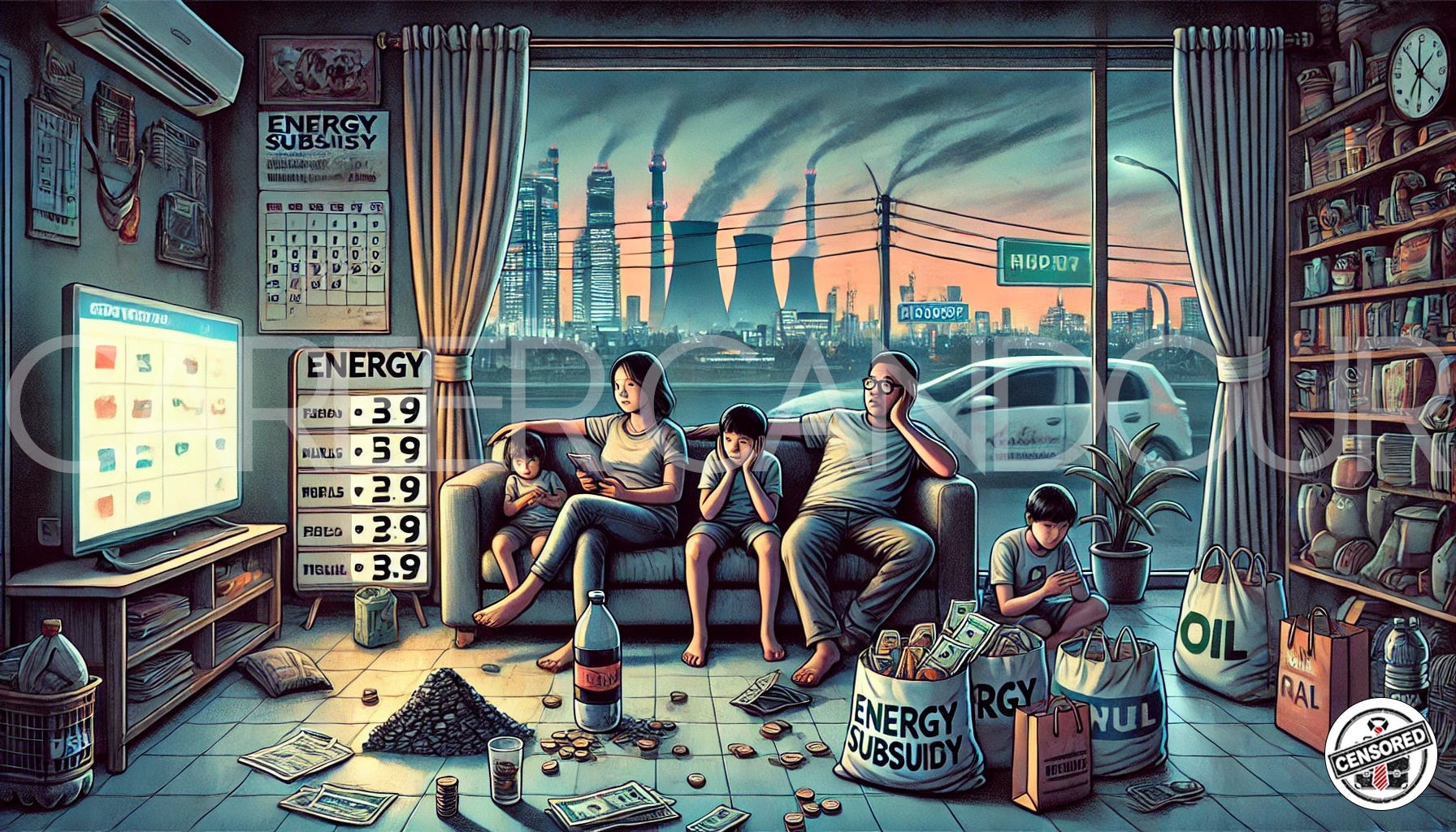
The latest conflict involving Israel, Iran, and the United States has spilled into the wider region, threatening the Strait of Hormuz and reminding the world that yes, global peace is basically a Jenga tower built out of oil barrels.
In Indonesia, however, life goes on.
Office workers sit in traffic with saintly calm,
Delivery drivers zigzag through gridlock,
Millions scroll past headlines as if geopolitics were a genre of fiction.
There is a belief that being far away equals being safe. Seventeen thousand islands should count for something. Distance feels protective. It is not.
So, what does a four week crisis versus a twelve month conflict really mean for people here? For their jobs, their salaries, their groceries, and that background hum of anxiety that comes from knowing the fuel in your motorbike is priced in someone else’s war…
Four Weeks In: Business as Usual
If the conflict lasts only four weeks, here is the scientific, data-driven, IMF-approved, cutting-edge modelling outcome:
Nothing much happens.
Yes, oil prices spike.
Yes, the Strait of Hormuz becomes the most searched location on Google.
Yes, Western news outlets panic for content.
But inside Indonesia?
Fuel prices? Same.
LPG for cooking? Same.
Job market? Same ish.
Middle class lifestyle? Still mall + kopi susu + GrabFood.
Government stance? “Please relax, everything is under control, we are having a meeting about a meeting.”
Four weeks is simply not long enough for the machinery of daily life to truly adjust. Oil shipments are contracted months in advance. Inventories exist. Subsidy formulas are designed precisely for this kind of turbulence. Pertamina absorbs the pressure quietly, and the Ministry of Finance runs spreadsheets at 2am.
In fact, the only real difference will be:
People will argue more on Twitter
Your uncle will forward 19 WhatsApp conspiracy theories
A handful of economists will suddenly get invited to talk shows
Companies do not freeze hiring over a four week shock. HR departments do not cancel promotions because Brent crude had a bad month. Restaurants do not double prices overnight. Banks do not panic. The system is built to handle short storms.
Indonesia’s favourite defensive weapon, subsidies; acts like a big warm blanket over the economy. For at least a month, the government can hold the line by increasing compensation payments and hoping markets calm down.
In short:
FOUR WEEKS = A STORM YOU READ ABOUT ON THE NEWS WHILE ORDERING NASI GORENG.
No dramatic job market freeze, no apocalyptic cost of living shock, no sudden middle-class collapse. Just mild anxiety.

Twelve Months In: The Slow Squeeze
Now let’s stretch this thing out to 12 month. A full year of elevated oil prices, jittery markets, and governments pretending this is all manageable.
This is where Indonesia’s myth of being “self-reliant” dies.
Yes, Indonesia has coal. Plenty of it.
Yes, Indonesia exports palm oil, nickel, and other commodities the world still wants.\
Yes, Indonesia produces some oil.
But the truth is:
Indonesia imports around two-thirds of the oil it uses, making it not exactly “self-sustaining.”
When global oil stays high for months, the impact is incremental. Which makes it more dangerous.
The Cost of Living Climbs
Motorbike fuel → up
Cooking gas → up
Fried chicken portion → suspiciously smaller
Ride-hailing fees → get “adjusted”
Electricity? Depends which minister wakes up in a bad mood
The government attempts to cushion the blow through subsidies and compensation schemes. That buys time. It does not eliminate cost. Eventually the fiscal pressure forces adjustments.
The Job Market Doesn’t Implode
No mass unemployment. Just:
Hiring freezes in formal companies
Pay increments trimmed
Overtime reduced
More people pushed into gig work
Factories quietly shrinking headcount
HR departments rediscovering that word “cost-efficiency”
Meanwhile, coal, nickel and agribusiness keep hiring, offering stable but not exactly “I want to work here because it aligns with my passion” feels.
Middle Class Life Shifts From Comfortable to Cautious.
The Indonesian middle class doesn’t collapse under a 12-month shock, they:
Take fewer holidays
Switch from Starbucks to Kopi Kenangan
Cut GrabFood from daily to twice a week
Start choosing cheaper brands
Talk nervously about school fees and mortgages
The real danger is erosion, not catastrophe.
People survive, as they always do. They just feel poorer, incrementally more anxious, and incrementally less certain about the next year than the last.

The Risk of a Tipping Point
A 12 month crisis does not automatically push Indonesia into collapse. This is not Lebanon. It is not Sri Lanka.
Public debt is manageable.
Foreign reserves are substantial.
Institutions are imperfect but functional.
There is no immediate cliff edge where one bad headline triggers national chaos.
But it can reach a breaking point under certain conditions.
Condition 1: Global recession + expensive oil.
If China slows, the US slows, and the EU slows at the same time oil stays high, then:
Indonesian exports weaken
Government revenue drops
Subsidies become harder to finance
The rupiah slides
Bank Indonesia must raise rates
Loans become expensive
Middle class households feel the pinch hard
Condition 2: Large fuel price hikes.
Indonesians are famously patient… until fuel prices jump overnight.
Then:
Memes intensify
Street protests appear
Parliament pretends to be shocked
“Subsidy reforms” get postponed until the end of time
Condition 3: Youth underemployment worsens.
NEET youth already make up more than 20% of the population. Add long-term higher living costs and slower hiring, and you create a generation of:
Gig workers
Part-time hope-holders
Digital hustlers
People who did a degree but now sell skincare online
This is not instability in the street-protest sense, but a long-term weakening of national productivity and optimism.
Indonesia is unlikely to explode. The greater risk is a gradual deflation of confidence. A population that keeps functioning but with reduced momentum. Not crisis television drama. More like a system losing a little pressure each year until it feels permanently subdued rather than temporarily stressed.

Is Indonesia Well Positioned? Yes and No
Indonesia is neither fragile nor invincible. It sits somewhere in that middle space where survival is likely but comfort is not guaranteed.
YES – Indonesia is well positioned because:
It has domestic coal
Its economy is driven by domestic consumption, not exports
It has large foreign reserves
It has experience managing crises
The government can subsidize almost anything if sufficiently panicked
People are adaptable and endlessly entrepreneurial
Families act as the real welfare system (“pulang kampung dulu ya, kerja apa aja”)
Now the uncomfortable half.
NO – Indonesia is not well positioned because:
It imports most of its oil
It relies heavily on cheap LPG for cooking
A majority of workers are in the informal sector
Manufacturing is weakening
Youth unemployment is a creeping crisis
Subsidies are eating the budget alive
Education-to-job mismatches are everywhere
So is Indonesia well positioned?
Yes, in the sense that it can endure turbulence without systemic collapse.
No, in the sense that endurance is not prosperity.
Indonesia is positioned to absorb pain. It is not perfectly positioned to avoid feeling it.
A four week crisis is largely psychological. Stretch that to twelve months and the shift becomes tangible.
4-week crisis → mostly noise; mild anxiety; no major change.
12-month crisis → real economic pressure, slower hiring, rising living costs, and a squeeze on lower-middle and middle-class Indonesians.
There is no dramatic implosion. What changes is trajectory.
Growth becomes harder.
Mobility becomes slower.
Career paths become less linear and more improvised.
Hustling increases.
Saving becomes inconsistent.
Anxiety settles into the background hum of daily life.
Indonesia’s strengths help it survive shocks. Resilience, informality, resource exports, and demographic size cushion impact. But energy dependence, subsidy burdens and skills mismatches determine how much pain the average household feels in the process.
This is not doom.
This is not collapse.
This is the messy middle: the zone where life still goes on, but harder, costlier, and with more “ya sudahlah” than anyone would prefer.
At StratEx - Indonesia Business Advisory we help organisation anticipate change, protect talent, and redesign workforce strategy. Contact us to understand how macro risks translate into hiring, retention, and workforce resilience.