


Earlier this year, Indonesia announced its latest economic transformation scheme: a plan to overhaul the country’s State-Owned Enterprises (SOEs) by handing the keys to a new superholding fund named Danantara. The mission: consolidate, restructure, streamline and somehow turn politically tangled, and at times cash-bleeding entities into profitable darlings of global finance. Yes, it’s as realistic as it sounds.
Danantara’s task is simple if you ignore reality. Take hundreds of SOEs staffed beyond logic, and built to serve half a dozen political agendas at once, and make them lean, efficient, and IPO-ready.
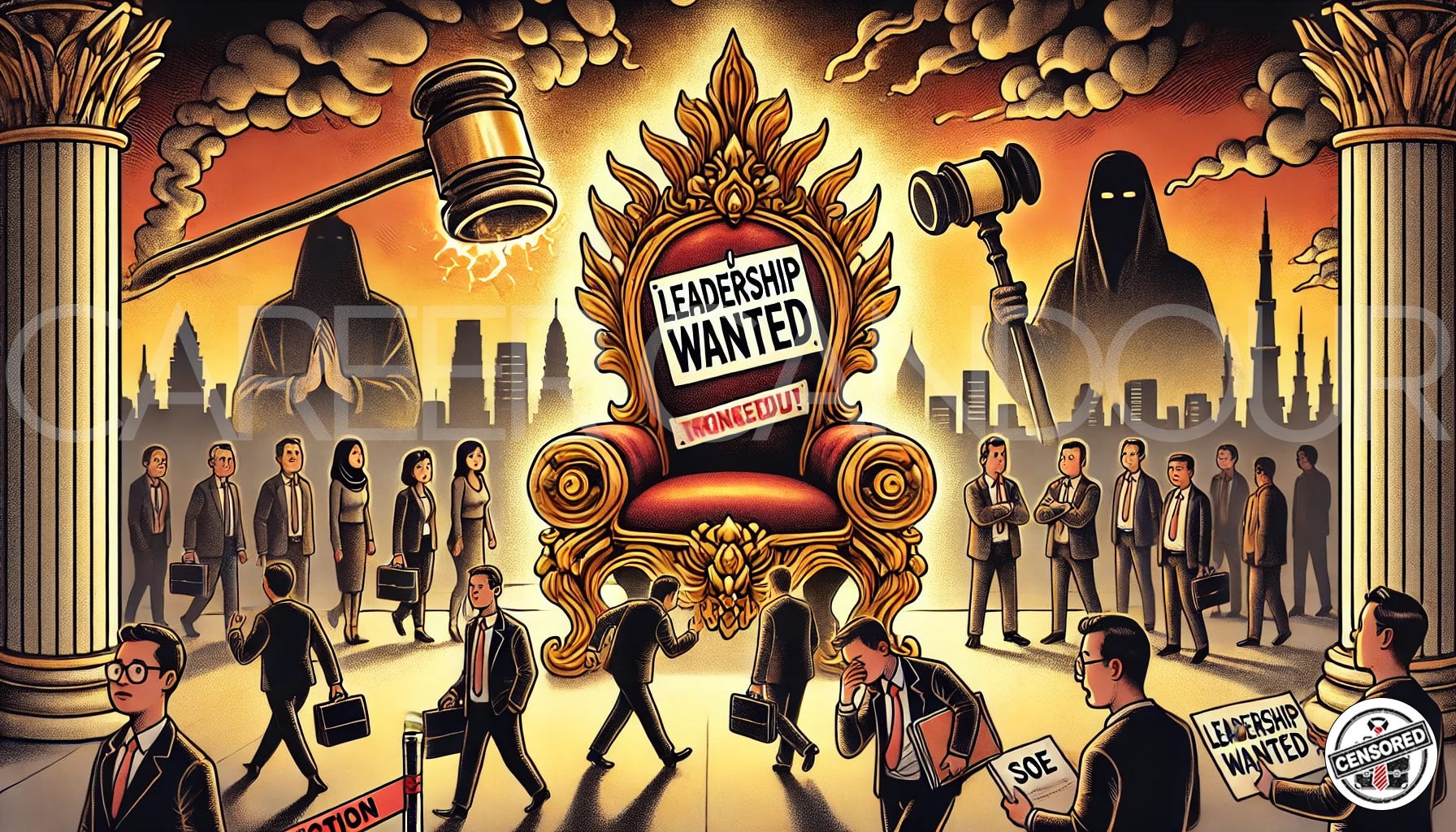
There’s just one problem. The people needed to execute this plan are already backing away slowly, checking their passports and pretending to have unrelated health issues. Because in Indonesia, turning around an SOE is career roulette. If it works, maybe you get a handshake. If it doesn’t, you might get a subpoena.
Amendments to the BUMN Law promise you won’t be jailed for losing money. But in a country where legal reassurances often expire, most professionals are understandably skeptical. They’ve seen this movie. It ends with court dates.
A Superfund So Bold Even Superman Would Ask For An Indemnity Agreement
Danantara is being pitched as part Temasek, part private equity firm, part government holding company, and part nationalistic dream. A multi-headed institutional hydra that will centralise the state’s most “strategic” SOEs, restructure them, make them investor-ready, and raise funds from domestic billionaires using bonds draped in red and white branding.
The task list is breathtaking in its confidence:
Consolidate nearly a thousand state-owned entities.
Rationalise them into two hundred.
Fix governance, boost returns, fire no one politically connected, and sell the story to global capital markets.
All while keeping every minister, local politician, regulator, and tycoon happy.
The mission is bold. But then the inevitable question arises, usually between bites of canapés at high-level meetings:
Who is actually brave enough to implement this?
Because this isn’t Norway managing oil money. This is Indonesia trying to fix institutions that haven’t seen a clean balance sheet since the early ‘90s. SOEs that were never designed to be “efficient” so much as “instrumental.”
Turn them around, and you risk offending half the country’s informal power networks.
Fail to turn them around, and you’re one audit away from being labelled the reason state money disappeared.
The vision is big. The ambition is huge. The risk? Catastrophic.
This is the corporate equivalent of being handed a live grenade and asked to rearrange the furniture… gently, please. Investors are watching.

Where “Business Risk” And “Prison Risk” Share A Bedroom Wall
In Indonesia, making a business decision at a State-Owned Enterprise has long been considered one of the riskiest forms of public service, right up there with whistleblowing. The reason? A legal cocktail in which commercial loss, political fallout and the word “Tipikor” swirl together like ingredients in a bureaucratic Molotov.
Here’s the formula:
State capital invested in SOEs is considered part of national assets
A loss in a BUMN can thus be construed as a loss to state finances
Loss to state finances becomes grounds for corruption charges
And just like that, your Excel spreadsheet has become a criminal exhibit
It has been this way for years. Prosecutors don’t need to prove you enriched yourself. They can simply argue you enriched someone else. Or that you failed to act with “prudence”, a word that conveniently has no fixed definition but sounds very bad in court.
The government, aware that it might need at least a few people to run SOEs without constant fear, passed legal reforms in 2025. This was met with cautious optimism by lawyers and open skepticism by anyone who has read the news in the last ten years.
Because here, “good faith” is a flexible concept. It bends. It stretches. And if someone politically important is upset, it snaps. When the political tide turns, yesterday’s well-documented investment committee memo becomes today’s corruption probe.
This is why the real reform is cultural, not legislative. But culture, does not change by decree.

Where “Reform” Means Offending Every Powerful Person In A 500km Radius
Politics in Indonesia is a finely tuned system of alliances, handshakes, phone calls, patronage, regional quid pro quos, and the occasional anti-corruption campaign for public morale. In this environment, “reform” is a declaration of war.
Danantara’s restructuring mission requires a full-frontal collision with this system. Not metaphorically. Literally.
Trimming the SOE portfolio means laying off tens of thousands of workers, many of whom are on payrolls because someone’s cousin needed a job or a district-level party branch needed funding. Shutting down legacy subsidiaries means turning off the tap on inflated procurement chains designed more for “community benefit” than efficiency.
Every closure, every write-down, every efficiency initiative chips away at someone’s political base.
That sleepy fertilizer company with four board directors? It also pays for campaign buses in Central Java.
The unprofitable steel factory? A crucial piece in someone’s regional vote map.
So when a restructuring officer walks into the room with a cost-cutting plan, what the room hears is:
“Hello, I am here to delete your campaign funding and fire your extended family.”
This is an act of political rebalancing, carried out under the polite cover of “efficiency.” And Indonesia’s political history has taught us one thing: those who mess with patronage networks often find themselves investigated, sidelined, or mysteriously reassigned to a lower-profile advisory role in maritime affairs.
Hence the silence from the qualified. The good ones know exactly what this job entails. And they know better than to bring a calculator to a knife fight.

The Memory of “Politically Motivated Prosections”
Ask any Indonesian technocrat why they remain deeply suspicious of legal reforms and you’ll get a smirk and a one-liner.
“I can read the news.”
This isn’t cynicism. It’s muscle memory. In Indonesia, legal protections have a track record of behaving like haunted house doors. Sometimes they swing open with confidence. Other times they slam shut just as you step through.
The country’s political history is dotted with prosecutorial moments that felt less like the rule of law and more like a twist in a sinetron that’s been running for too long. People who were previously hailed as reformers are suddenly defendants. Their crimes? Often suspiciously timed.
A procurement form signed six years ago becomes a headline.
A project that passed three audits is now “under review.”
A memo you forgot about resurfaces in a 200-slide PowerPoint under the heading “Abuse of Authority.”
It doesn’t matter whether the case is real or fabricated. What matters is that these stories circulate. They get whispered across boardrooms and warung tables. They become folklore. And once something becomes folklore in Indonesia, it becomes functionally true.
This is why legal immunity doesn’t inspire confidence. It inspires hedging. Political winds shift. Power changes hands. And suddenly the person who promised you protection is no longer in charge of the plug socket.
So, when technocrats hear about the Third and Fourth Amendments to the BUMN Law, they don’t relax. They nod politely and continue keeping detailed backups in three jurisdictions. Not because they plan to do anything wrong. But because they’ve seen too many people end up in trouble for doing everything right, just at the wrong time.
Danantara is, conceptually, the kind of reform Indonesia needs. The scale, the ambition, the promise of economic transformation. It all reads like the beginning of a national success story. On paper, it is almost poetic. But in practice, it requires a level of trust in institutional behavior that Indonesia’s political and legal ecosystem is not currently built to sustain.
Trust that technocrats will not be prosecuted retroactively for political fallout.
Trust that legal interpretations will remain consistent through changes in power.
Trust that immunity clauses will survive the first real scandal.
That trust, right now, is aspirational.
Indonesia is attempting the largest corporate restructuring project in its modern history without sufficient political insurance for the people tasked with carrying it out. And so, the country finds itself in a catch-22: it has the capital, it has the blueprint… but not enough brave souls willing to climb into the cockpit.
Danantara may still succeed. But if it does, it will be despite the system, not because of it. Until that changes, the vision remains a beautifully animated plan that everyone claps for, then quietly walks away from.
At StratEx - Indonesia Business Advisory we partner with boards, investors and operators to build the structures and safeguards that let leaders lead. Contact us to understand how to attract and retain transformational talent in Indonesia.